
What Is an Australian Student Visa (Subclass 500) and How Do You Apply?
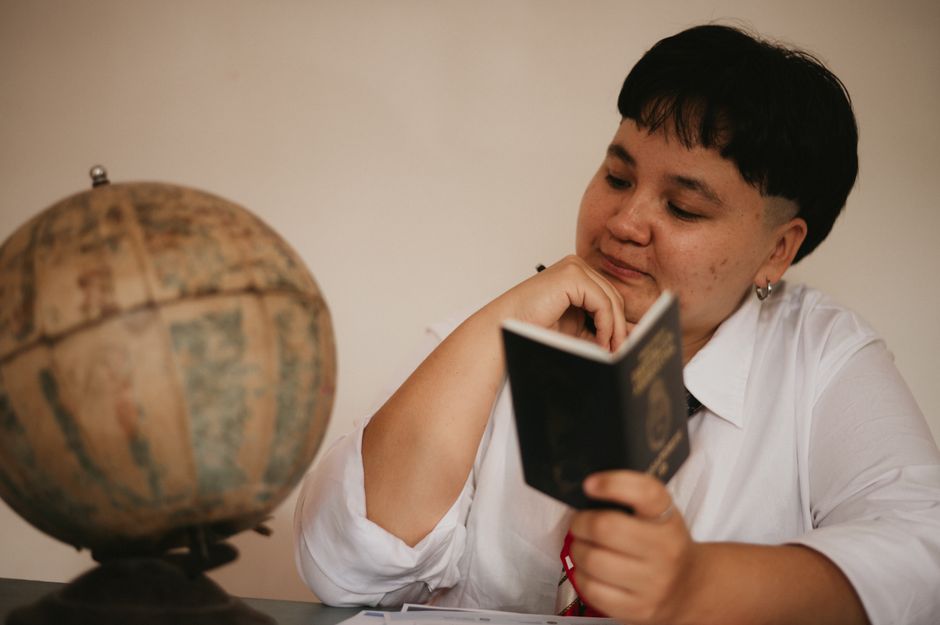
An Australian Student Visa (subclass 500) allows international students to study full-time at a registered education provider in Australia. The visa is administered under the Migration Act 1958 (Cth) and the Migration Regulations 1994 (Cth) by the Department of Home Affairs. To be granted a Student Visa, you must be enrolled in a registered course, meet genuine temporary entrant requirements, and satisfy health, character, and financial capacity criteria.
Key Takeaways
The Student Visa (subclass 500) is the primary visa for international students intending to study in Australia
You must be enrolled in a registered course (CRICOS-registered) before applying
Genuine Temporary Entrant (GTE) or Genuine Student (GS) requirements must be satisfied
The visa permits part-time work (48 hours per fortnight) and dependent family members may be included
Visa conditions vary and breaching them can lead to cancellation or refusal of future applications
What Is the Australian Student Visa (Subclass 500)?
The Student Visa (subclass 500) replaced several older student visa categories in 2016 and is now the single streamlined visa for international students across all education sectors — from English language courses to PhD programs. It is a temporary visa that permits the holder to remain in Australia for the duration of their enrolled course, plus associated holiday periods.
The Migration Regulations 1994 (Cth) set out the legislative framework for this visa, including the criteria that must be met at time of application and at time of decision. The Department of Home Affairs assesses each application on its merits.
Key Conditions Attached to a Student Visa
Student visas typically include the following mandatory conditions:
Condition 8105 — Work limitation of 48 hours per fortnight while the course is in session
Condition 8202 — Maintain enrolment in a registered course, meet course progress requirements, and maintain satisfactory attendance
Condition 8501 — Maintain adequate health insurance (Overseas Student Health Cover)
Condition 8516 — Continue to satisfy the criteria for visa grant
Condition 8517 — Ensure school-age dependants are enrolled in schooling
Breaching any of these conditions can result in visa cancellation under section 116 of the Migration Act and may affect future visa applications.
Practical Application in Australia
International students apply directly through the Department of Home Affairs online portal (ImmiAccount). Processing times vary depending on the education provider, country of passport, and whether a health assessment or character clearance is needed.
In Queensland, major education providers include the University of Queensland, Queensland University of Technology, Griffith University, and TAFE Queensland institutions in Brisbane and regional areas. Students studying in Brisbane benefit from a large international student community, dedicated support services, and post-study work options.
The visa duration is generally aligned with the course length. For example:
A three-year bachelor degree typically attracts a visa valid for up to five years
Shorter courses (English language, certificates, diplomas) attract a visa for the course duration plus two months
Common Risks and Mistakes
Insufficient financial evidence — Home Affairs requires genuine access to funds for tuition, travel, and living costs. Underestimating this or providing unclear documentation is a frequent cause of refusal.
Genuine Student requirement not properly addressed — The Genuine Student (GS) criteria (formerly GTE) assess your intent to study and return home. A poorly drafted statement or weak ties to your home country can lead to refusal.
Working before course start date — Work is not permitted until the course begins. This is a breach of condition 8105.
Changing providers without notification — Students who change education providers without enrolling in a new course risk condition 8202 non-compliance.
Letting health insurance lapse — This breaches condition 8501 and can be grounds for cancellation.
Step-by-Step Process to Apply for a Student Visa
Choose a course and provider — Confirm the provider is CRICOS-registered and the course meets your academic goals.
Receive a Confirmation of Enrolment (CoE) — The provider issues a CoE once you accept the offer and pay the required deposit.
Gather supporting documents — Passport, CoE, financial evidence, Overseas Student Health Cover (OSHC), English language test results, Genuine Student statement, and any associated documentation (health check referrals, biometrics).
Lodge the visa application online — Complete the online form in ImmiAccount, pay the application fee (currently AUD 1,600 for the main applicant as of 2025–26), and attach all supporting documents.
Submit biometrics and undergo health checks — Follow the instructions provided after lodgement.
Wait for a decision — Processing times vary; check current estimates on the Home Affairs website.
Receive visa grant — If approved, review all conditions attached to your visa and ensure you comply.
Table Comparison: Student Visa vs Graduate Visa
| Feature | Student Visa (subclass 500) | Temporary Graduate Visa (subclass 485) |
|---|---|---|
| Purpose | Study full-time | Work after study |
| Work rights | Up to 48 hours per fortnight | Unlimited work rights |
| Dependants | Can be included | Can be included |
| Duration | Up to 5 years | 2–4 years depending on qualification |
| Pathway to PR | Indirect (via graduate visa) | Direct (if skilled occupation) |
Practical Next Steps
If you are considering studying in Australia or need assistance preparing a Student Visa application, it is advisable to seek professional advice to ensure your application is complete and addresses the Genuine Student criteria.
Contact our immigration law team for a consultation about your student visa options
Learn more about our immigration practice including student visas, graduate visas, and family applications
Meet our lawyers who specialise in Australian immigration law
Read more articles on our blog about Australian visa pathways and requirements